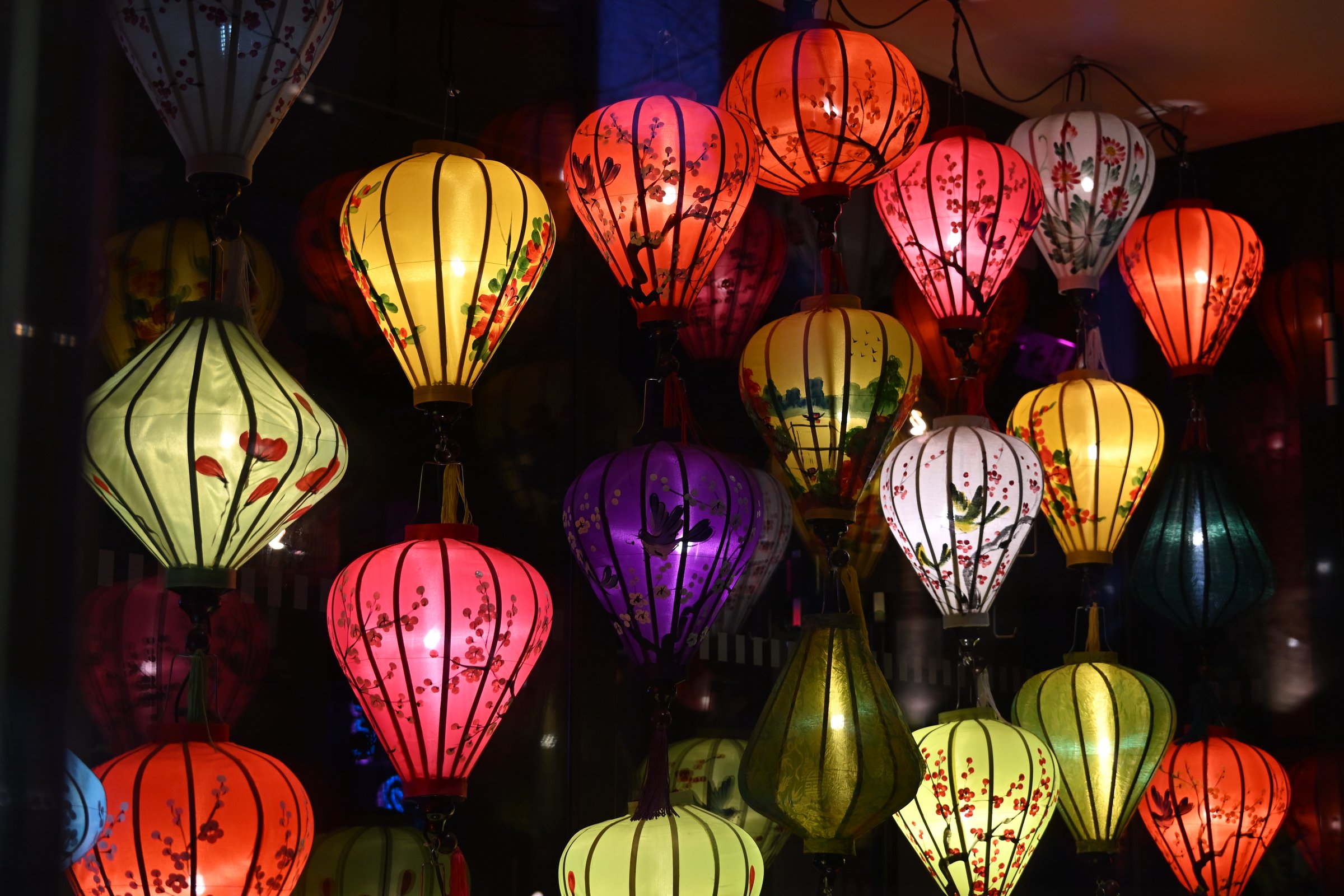
Illuminated silk lanterns in red, yellow, white, and purple hang suspended in darkness, their paper surfaces decorated with hand-painted floral motifs. Each lantern is constructed with a framework of thin wooden or bamboo ribs supporting translucent fabric, allowing internal light sources to glow through the material. The lanterns display characteristic Vietnamese design elements, featuring delicate botanical illustrations rendered in traditional pigments. This display represents a centuries-old craft tradition, where lantern-making serves both decorative and ceremonial purposes during cultural festivals. The varied color palette and consistent geometric form demonstrate the standardized production methods employed in artisanal workshops, while the hand-painted details indicate individual artisan involvement in each piece's creation. Such lantern installations are commonly featured in night markets and festival celebrations throughout Vietnam and Southeast Asia, serving as both functional lighting and cultural artifacts.
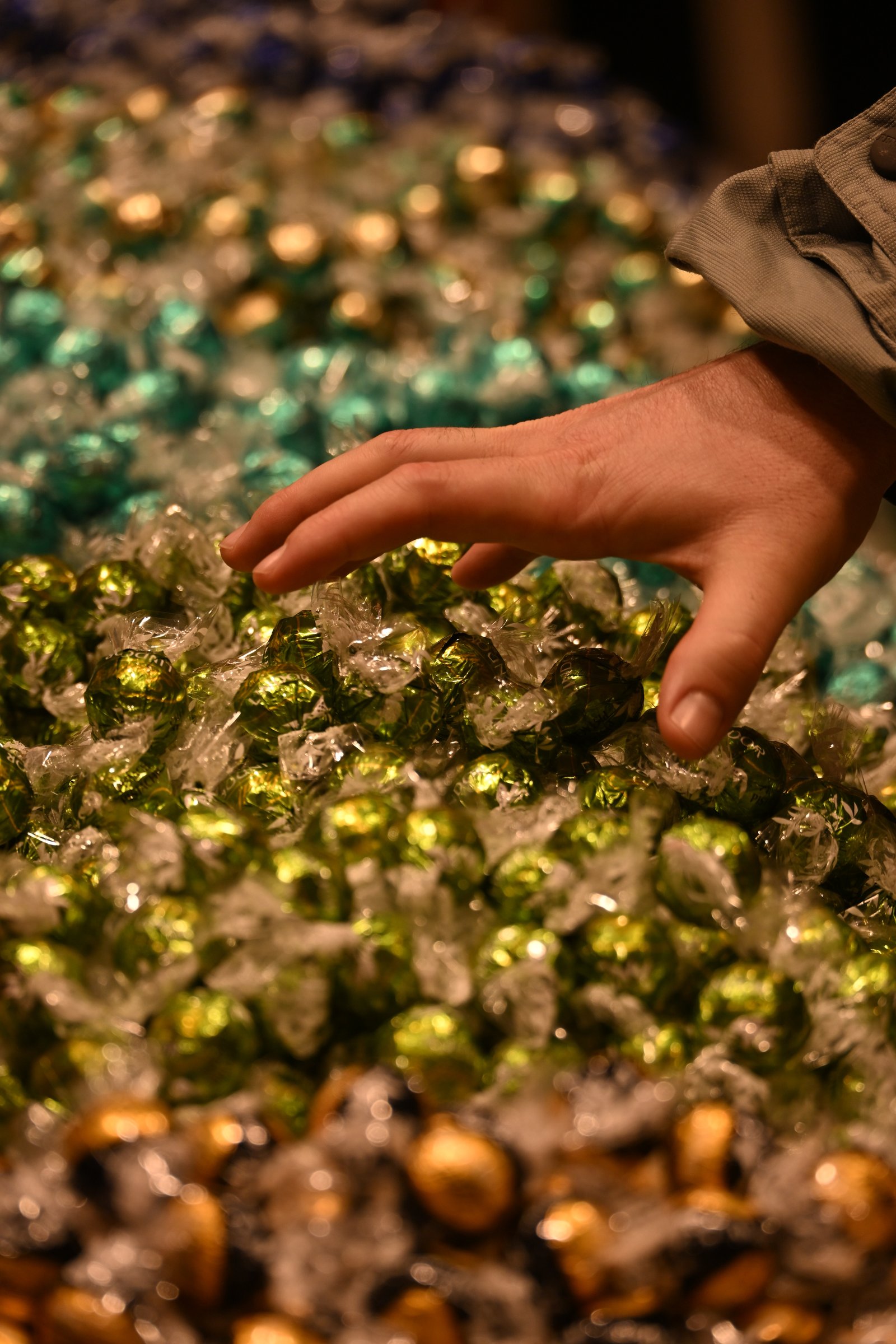
A hand reaches toward an assortment of wrapped chocolates displayed at a confectionery counter. The image captures a moment of consumer choice within a retail environment, where individually wrapped candies in gold, green, and clear foil packaging are arranged for sale. This type of bulk chocolate display is common in specialty shops and markets, allowing customers direct access to product selection. The photograph documents everyday commerce and the tactile nature of in-store shopping experiences, where consumers interact directly with food products during the selection process.
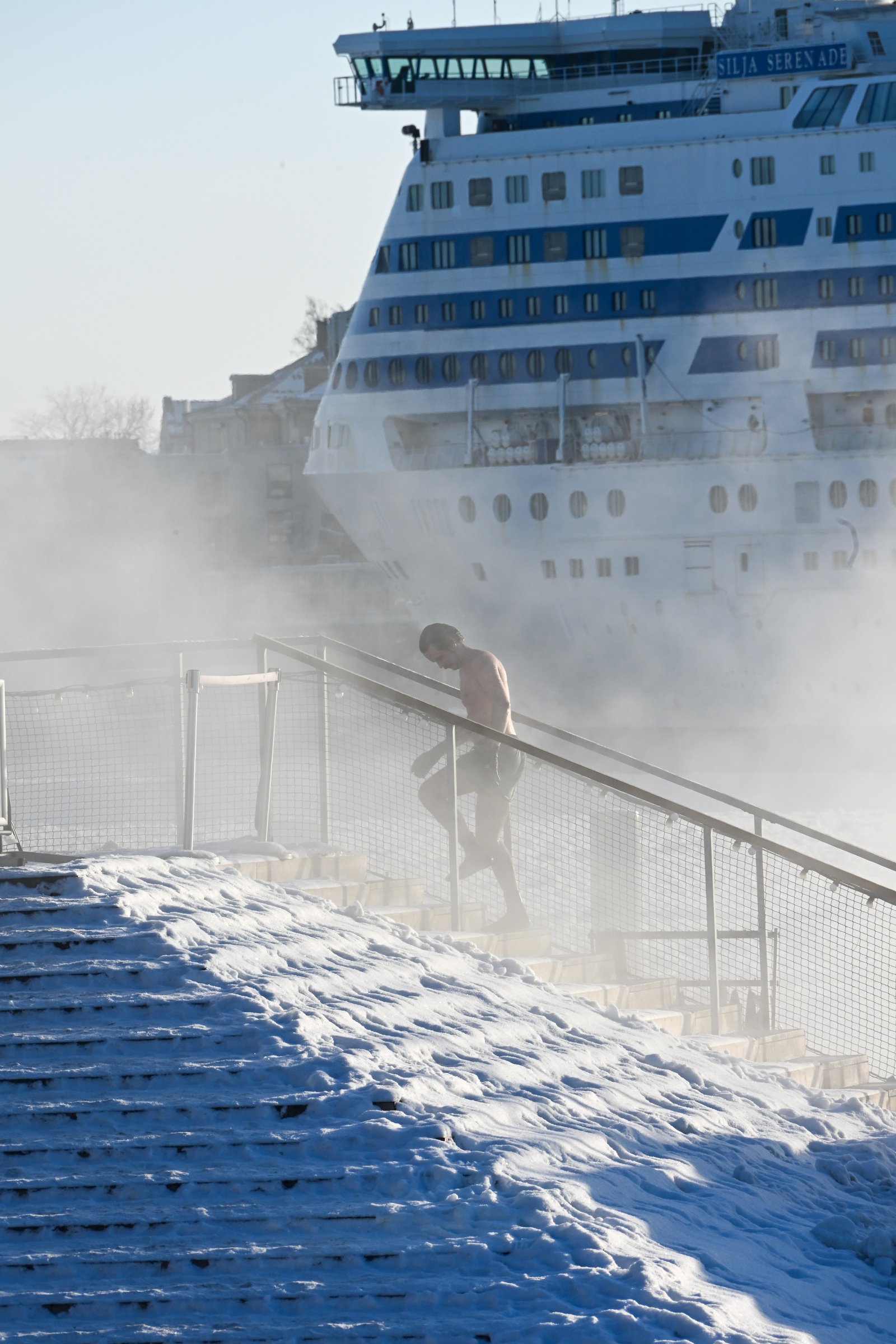
A swimmer prepares to enter the heated outdoor pool at Allas Sea Pool in Helsinki, Finland, as steam rises dramatically from the water into the frigid air. The contrast between the geothermal warmth of the pool and the sub-zero ambient temperature creates a thick vapor barrier, while the MS Silja Serenade cruise ship looms in the background, docked at the adjacent harbor. This image captures the Nordic tradition of winter swimming—a practice rooted in both cultural heritage and purported health benefits—set against the industrial landscape of Helsinki's waterfront. The phenomenon of visible steam occurs when water heated to approximately 38°C meets air temperatures well below freezing, creating conditions that challenge both physiology and resolve. Allas Sea Pool, which opened in 2016, has become a focal point for this centuries-old Finnish wellness practice, attracting both locals and visitors year-round.
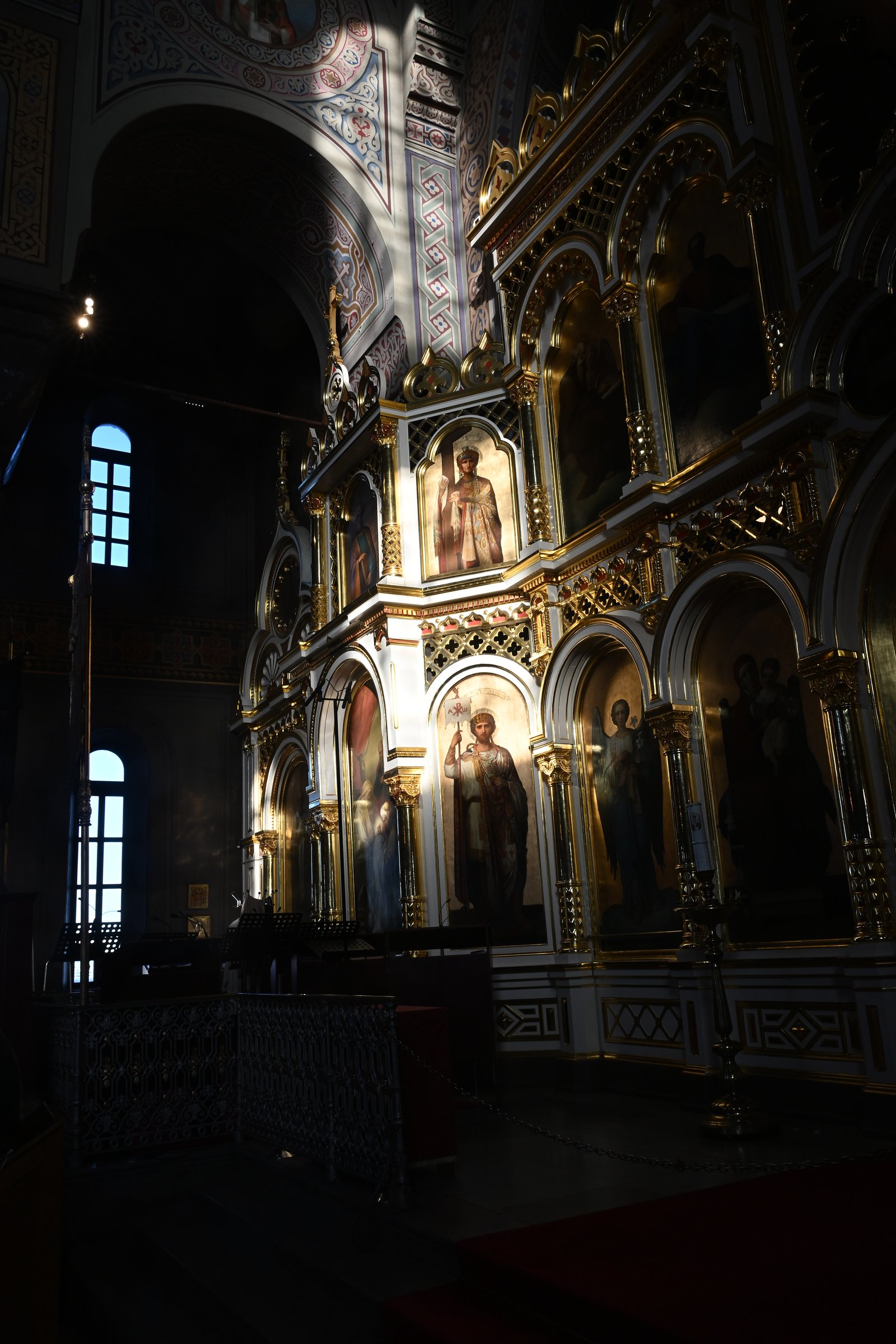
The Uspenski Cathedral's iconostasis—a towering screen of religious icons—dominates the interior space, its gilded ornamentation and Byzantine-style imagery characteristic of Russian Orthodox ecclesiastical architecture. Constructed in the late 19th century, the cathedral represents a significant cultural landmark in Helsinki, blending Eastern Orthodox traditions with the Nordic landscape. The interplay of artificial lighting on the ornate gold detailing and painted religious figures creates distinct zones of illumination within the darkened nave, while light filtering through the side windows provides contextual reference to the architectural scale. The iconostasis serves both liturgical and symbolic functions, separating the sanctuary from the congregation while presenting a visual narrative of Orthodox Christian theology through its arranged panels and figures. This architectural approach reflects the broader historical relationship between Finland and Russia during the period of Russian rule.
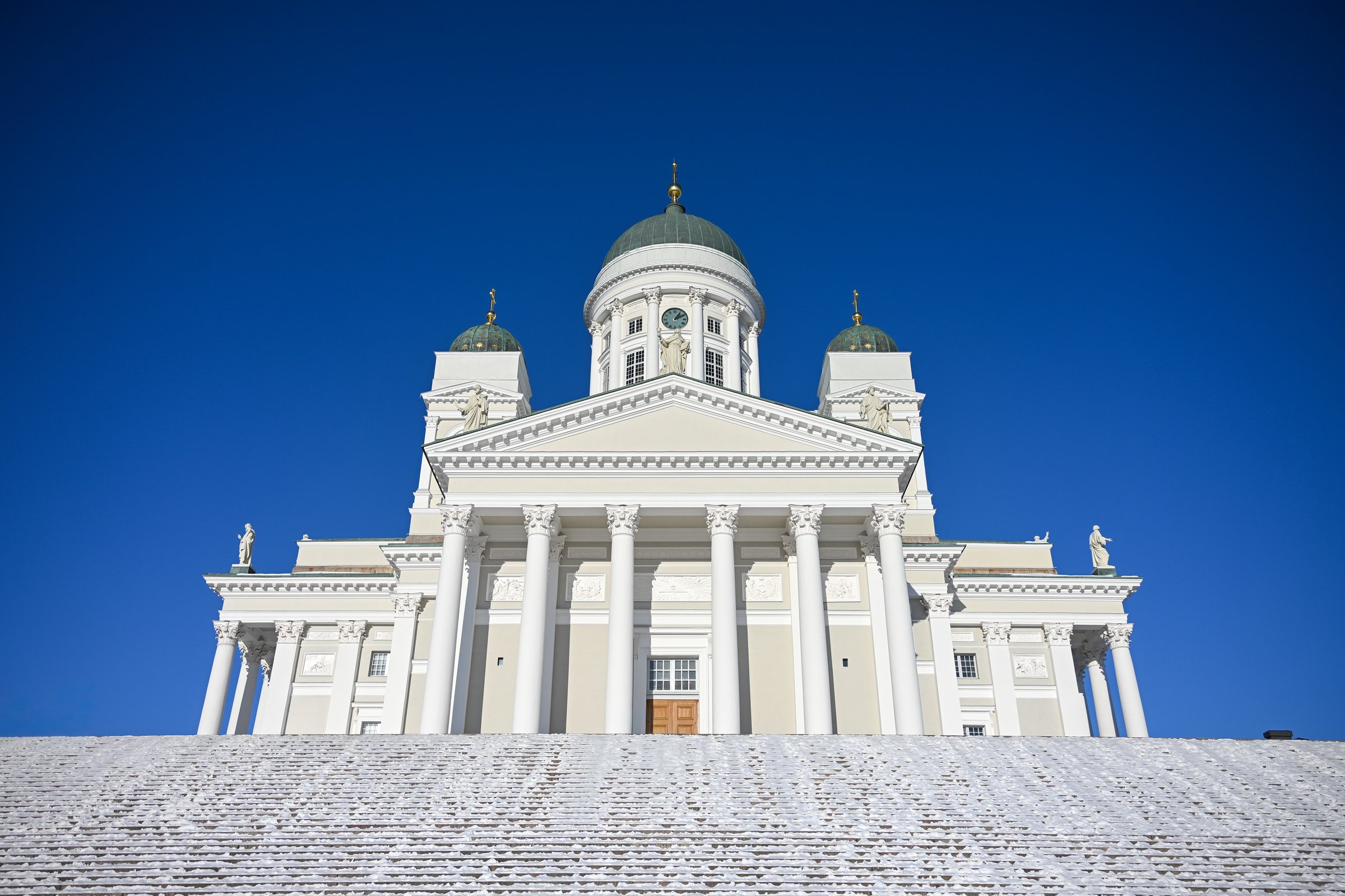
The neoclassical Helsinki Cathedral dominates Senate Square in Finland's capital, its white limestone facade and copper-topped domes rising against a clear winter sky. Completed in 1852, the structure exemplifies 19th-century Scandinavian architecture with its symmetrical design, Corinthian columns, and triple cupolas crowned with gilded crosses. The cathedral serves as both a functioning Lutheran church and an iconic symbol of Helsinki's urban landscape, visible from numerous vantage points throughout the city. The surrounding cobblestone plaza, dusted with snow, reflects the Nordic climate and the building's prominent position as a civic and religious landmark in the heart of the capital.
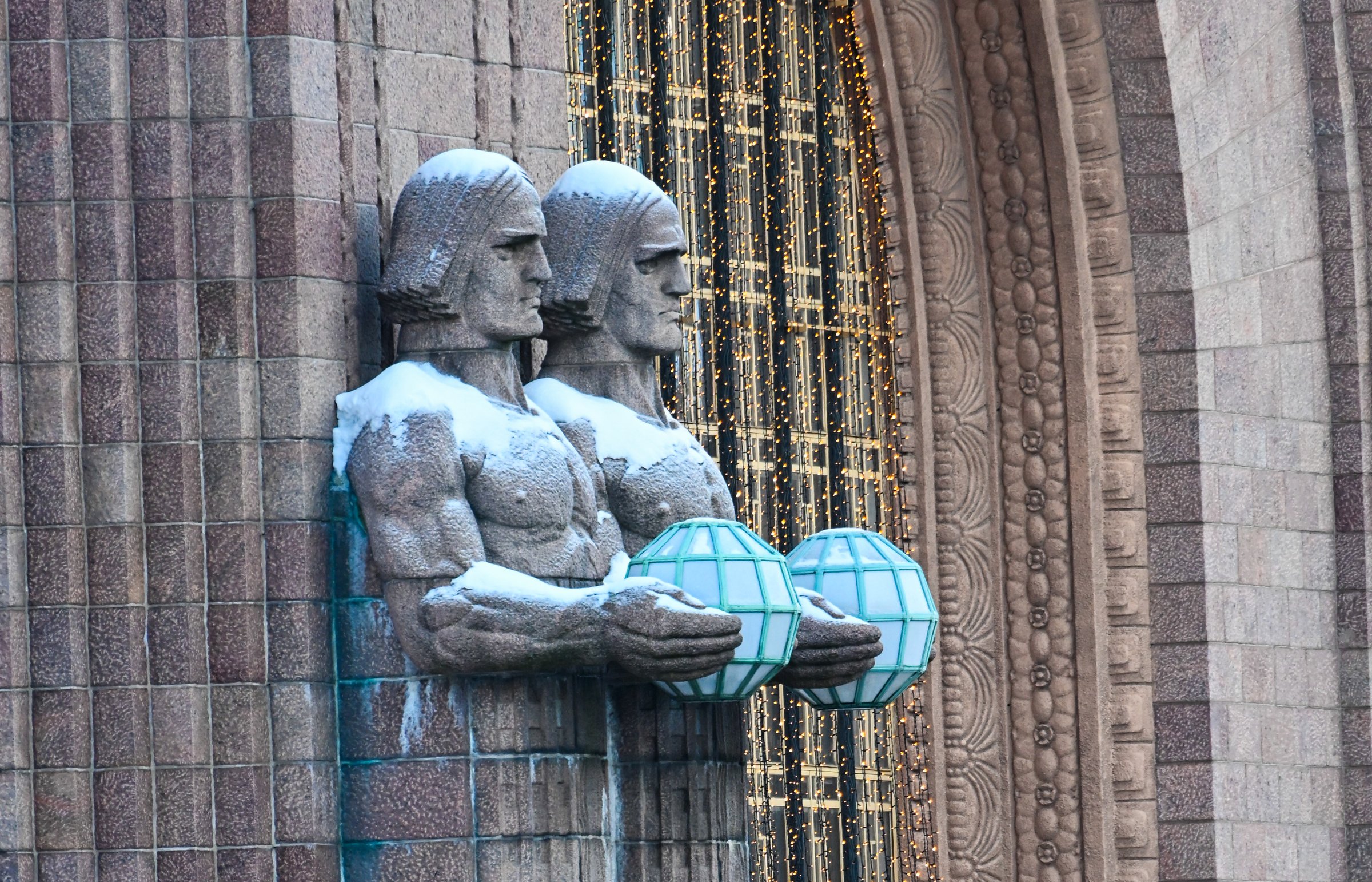
The "Lyhdynkantajat" (Lamp Bearers) sculptures stand as sentinels on the facade of the National Museum of Finland, their granite forms weathered by decades of Nordic winters. Created by sculptor Wäinö Aaltonen in 1912, these monumental figures represent the guardians of Finnish culture and enlightenment. The pair clutches stylized glass globes rendered in turquoise—originally designed to function as functional light fixtures, though now serving primarily as symbolic elements. The sculptures' positioning against the museum's ornate bronze doors and decorative tilework creates a deliberate visual hierarchy, with the classical stone figures anchoring the architectural composition. Winter snow clings to the figures' surfaces, emphasizing their three-dimensional form and the patina accumulated over more than a century of exposure. This installation exemplifies early 20th-century Finnish nationalism expressed through public sculpture, where monumental figures were employed to communicate cultural values and institutional purpose to the broader urban landscape.
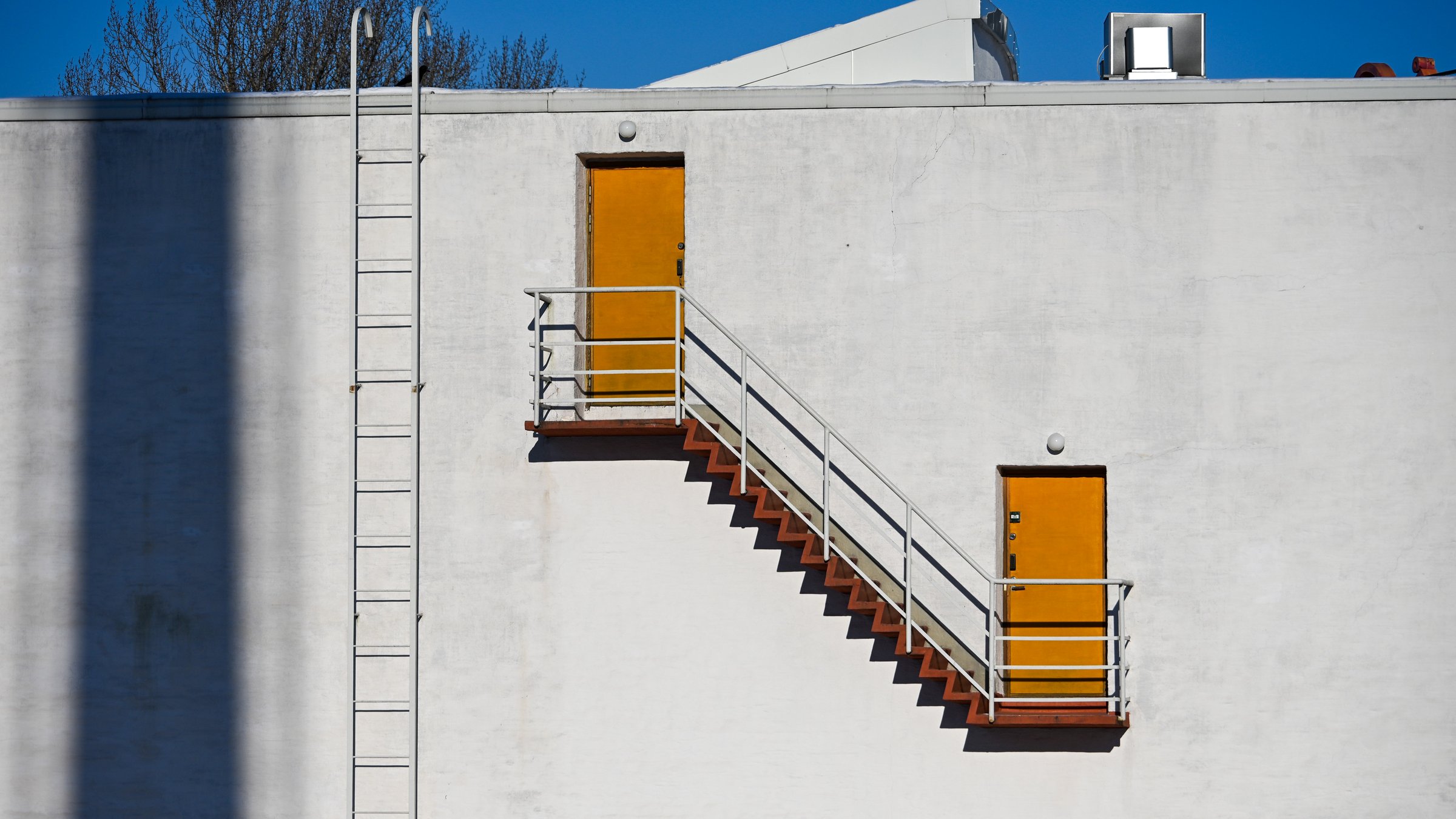
A modernist industrial structure in Helsinki exemplifies the functional design principles that characterize Northern European infrastructure. The composition features a stark concrete facade punctuated by two bright yellow-orange access doors, connected by a geometric steel staircase with safety railings. A metal ladder runs vertically along the left edge, while the clear blue sky and bare deciduous trees in the background suggest a temperate climate during late autumn or early spring. The interplay of shadows cast by the architectural elements creates strong geometric patterns across the white surface, highlighting the precision of the structure's engineering. This image documents the utilitarian aesthetic common to industrial facilities throughout Scandinavia, where functional design and material honesty form the foundation of architectural practice.
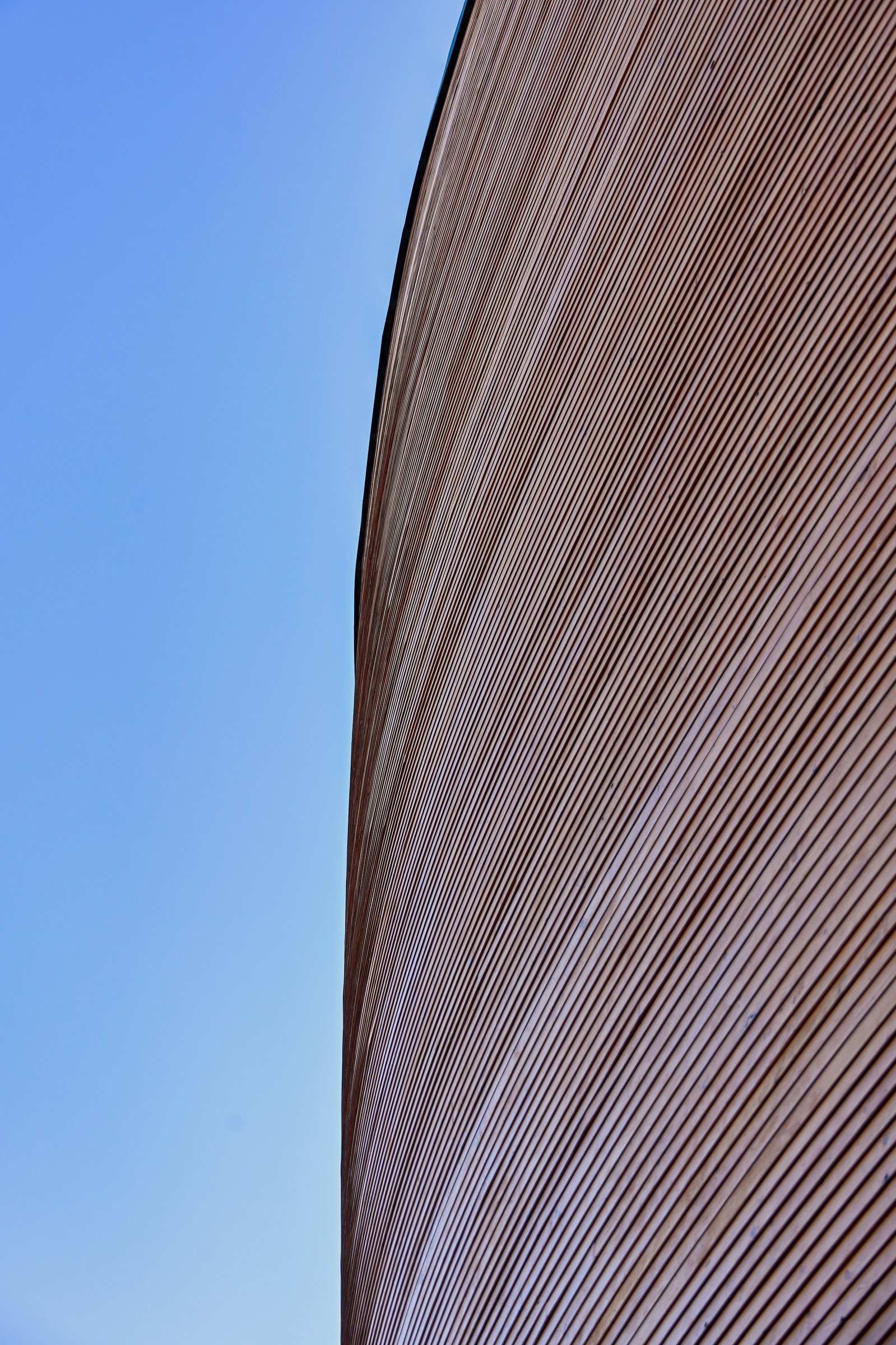
Designed by Finnish architects ALA Architects and completed in 2012, the Chapel of Silence occupies a prominent position in Helsinki's central Kamppi district. The structure's distinctive curved wooden facade, composed of precisely arranged vertical slats, creates a visual rhythm that shifts with changing light conditions and viewing angles. This minimalist architectural approach reflects contemporary Nordic design principles while serving a functional purpose: the chapel operates as a secular sanctuary offering respite to urban residents regardless of religious affiliation. The building's form—a simple, unadorned cylinder—deliberately eschews traditional religious iconography, instead emphasizing the concept of contemplative space through material and geometry. Located within one of Europe's busiest shopping centers, the chapel represents an intentional counterpoint to commercial activity, demonstrating how thoughtful spatial design can create zones of quietude within high-density urban environments. The structure has become a notable example of how modern architecture can address psychological and social needs in contemporary cities.
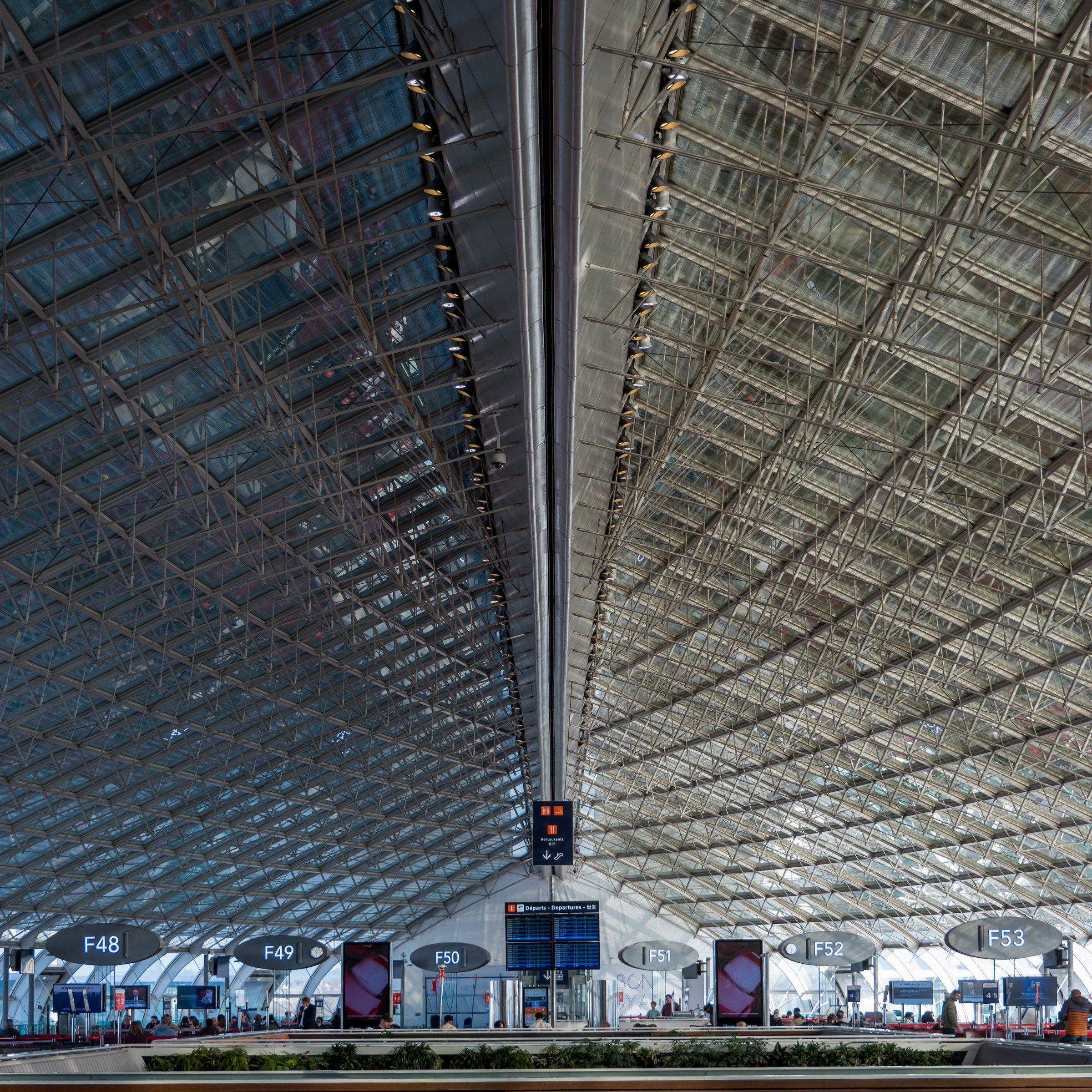
The soaring glass and steel lattice structure of Terminal 2B's departure hall exemplifies contemporary airport architecture. Completed in 2008, the terminal's distinctive barrel-vaulted roof spans 120 meters and is supported by a complex steel framework designed to maximize natural light while managing thermal loads. The repetitive geometric pattern of the structural grid creates a rhythm across the ceiling, with integrated lighting systems positioned along the primary support beams. Below, the terminal floor accommodates multiple departure gates (visible signage indicates gates F48-F53) with passenger processing areas and wayfinding infrastructure. The interplay of natural daylight filtering through the translucent roof panels and the geometric precision of the engineering demonstrates the functional requirements of modern aviation infrastructure—balancing passenger flow capacity, structural efficiency, and environmental considerations in a high-traffic international hub.
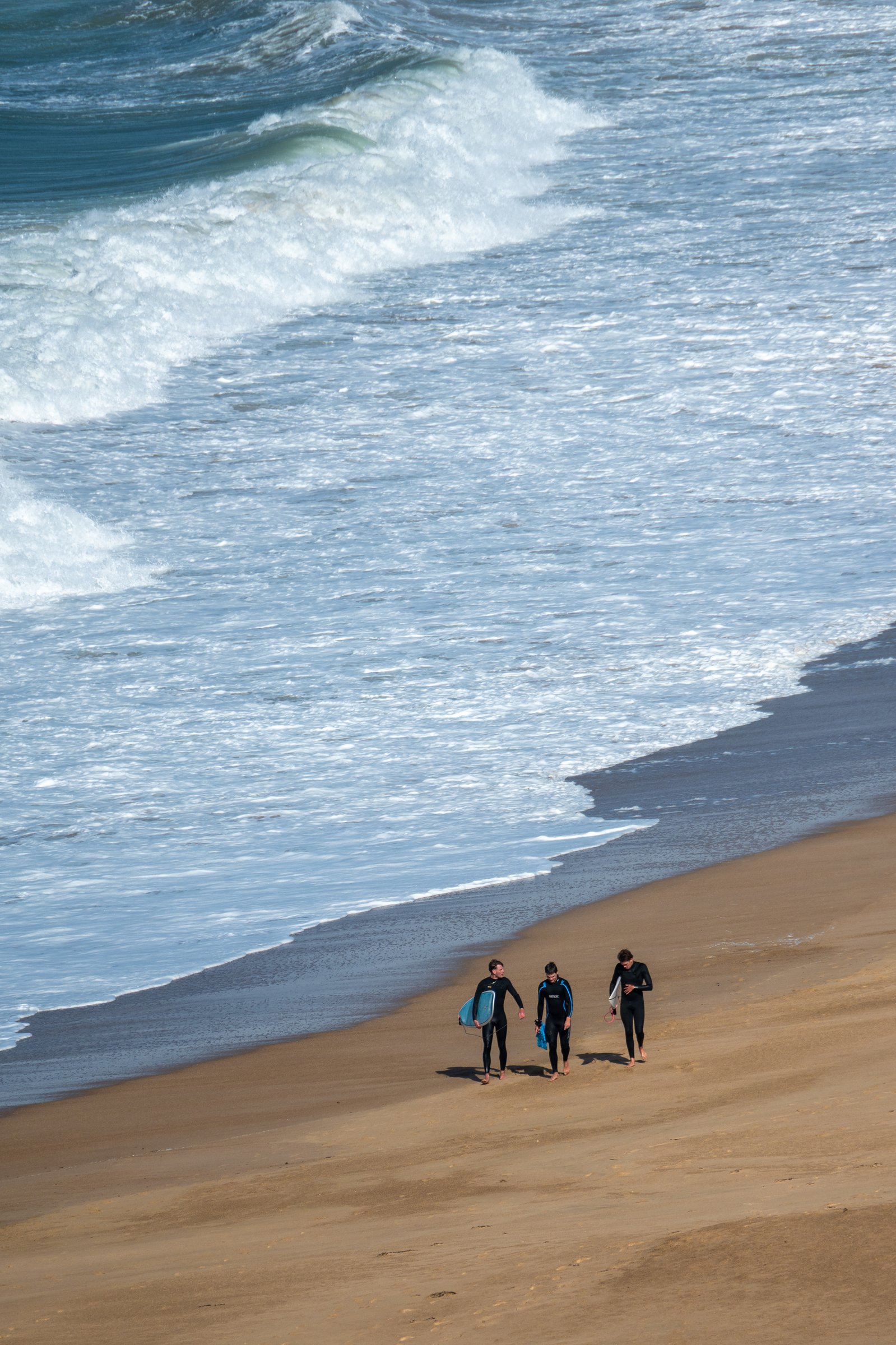
Three surfers in wetsuits stand on the sand at Erquy, a popular Atlantic coastal break in Brittany, France. Moderate swell rolls toward shore with whitecaps visible on multiple wave sets, indicating consistent offshore wind conditions. The beach's distinctive tan sand contrasts with darker sediment patterns left by tidal movement. Wave heights appear to range between 1–1.5 meters, typical conditions for this Côtes-d'Armor beach known for its reliable swells driven by Atlantic weather systems. The surfers' positioning on the beach suggests preparation for entry during a lull between sets—a common tactical approach in European beach break surfing where tidal cycles and swell direction significantly influence session quality.
51
CameraGoogle Pixel 9 Pro XLƒƒ/1.7Shutter1/850 sFocal6.9 mmISO22DateJuly 2025
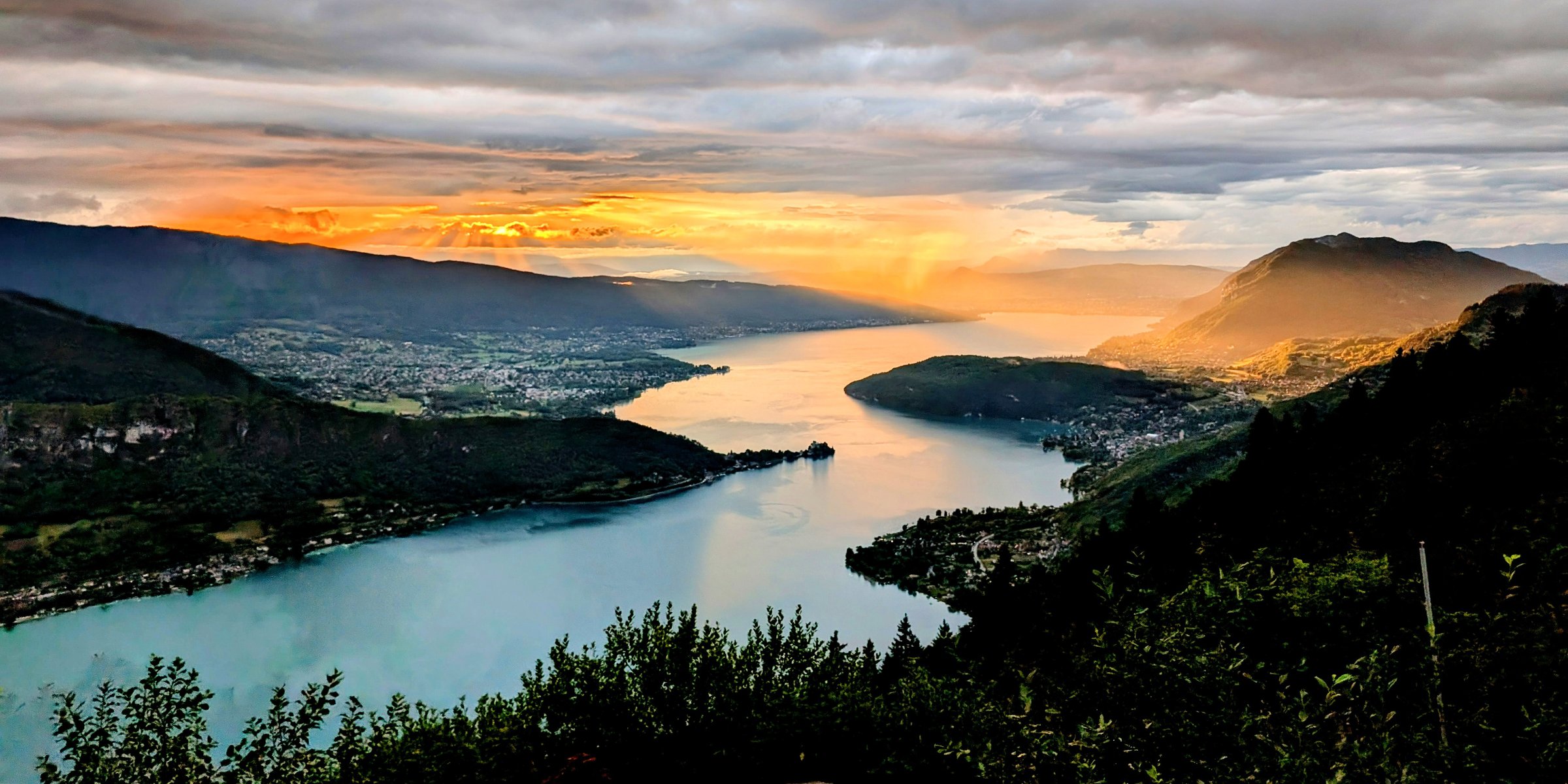
Lake Annecy, France
Lake Annecy at sunset
Captured from the Montmin overlook, this photograph documents Lake Annecy during the golden hour, revealing the glacial lake's distinctive turquoise waters framed by the Northern Alps. The image captures the interplay between human settlement and alpine geography—the lake's shores are densely populated with the towns of Annecy and Talloires visible along the shoreline, while steep forested slopes rise dramatically on either side of the water body. The atmospheric conditions at the time of capture created a stratified sky with warm light penetrating cloud cover, illuminating the surrounding peaks while casting the foreground vegetation in shadow. The lake's color gradient—from turquoise in the shallows to deeper blue in the center—reflects both the glacial sediment composition and water depth variations characteristic of this subalpine lake system. The composition documents the relationship between topography, settlement patterns, and the natural landscape that defines the Haute-Savoie region, with the lake serving as the focal point between the cultivated valley floor and the forested mountain ridges.
A costumed participant at a live-action role-playing (LARP) event sits beneath dappled forest canopy, wearing an elaborate costume featuring curved horns and burgundy fabric embellished with white floral elements. The figure, photographed from behind, displays detailed costume construction including textured garments and accessories typical of fantasy-themed immersive events. The natural woodland setting provides environmental context for the performance, with camp structures visible in the soft-focused background. This image documents the material culture and staging practices of contemporary fantasy role-playing communities, where participants invest significant effort in costume design and environmental authenticity to create immersive narrative experiences.
A participant at a live action role-playing (LARP) event sits along a waterside location in full medieval-inspired costume. The subject wears a red and white tunic with decorative embroidered trim, accessorized with an ornate black lace fan and a hand axe secured at the hip. The staging suggests an immersive fantasy narrative environment, with the participant positioned near natural stone features and vegetation. LARP events combine historical costume recreation with interactive storytelling, allowing participants to embody characters within constructed fantasy or historical scenarios. This documentation captures the material culture and character development aspects of participatory role-playing communities.
54
CameraGoogle Pixel 9 Pro XLƒƒ/2.8Shutter1/480 sFocal17.906 mmISO47DateJune 2025
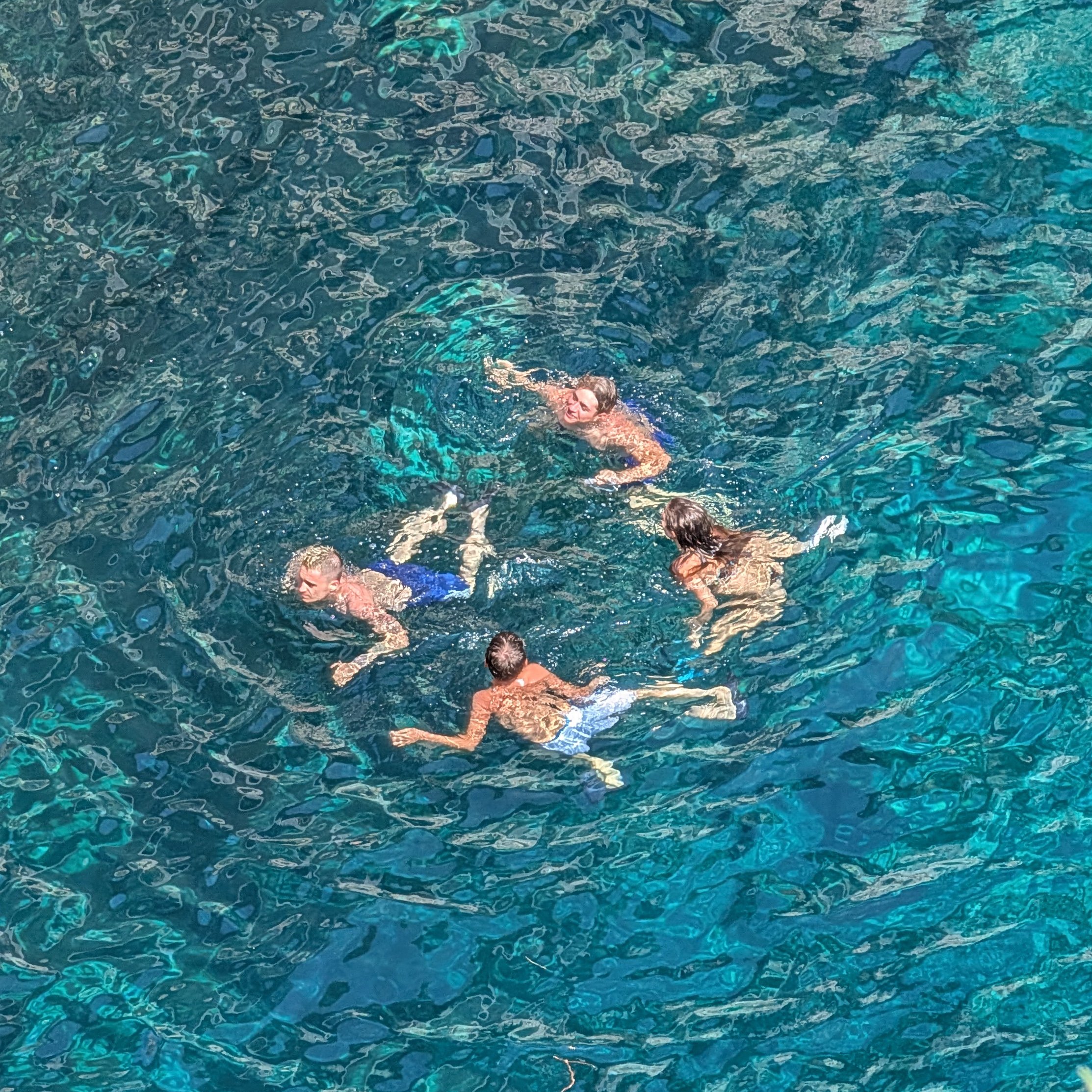
Salento, Italy
Swimmers at Ponte del Ciolo
Swimmers gather in the crystalline waters beneath Ponte del Ciolo, a natural limestone arch spanning the narrow strait between the Adriatic and Ionian seas in Puglia's Salento peninsula. The aerial perspective reveals the complex bathymetry of this geologically significant site, where shallow sandy bottoms transition to deeper channels carved by tidal currents. The water's transparency—a result of minimal sediment and the region's oligotrophic Mediterranean conditions—allows visibility to depths exceeding 15 meters, making this location a focal point for recreational diving and swimming. The bridge itself, formed through millennia of wave erosion and chemical weathering of the limestone bedrock, represents a dynamic landscape where marine and terrestrial processes continue to reshape the coastline. This natural formation has become increasingly popular with visitors, reflecting broader patterns of coastal tourism in southern Italy's protected marine areas.
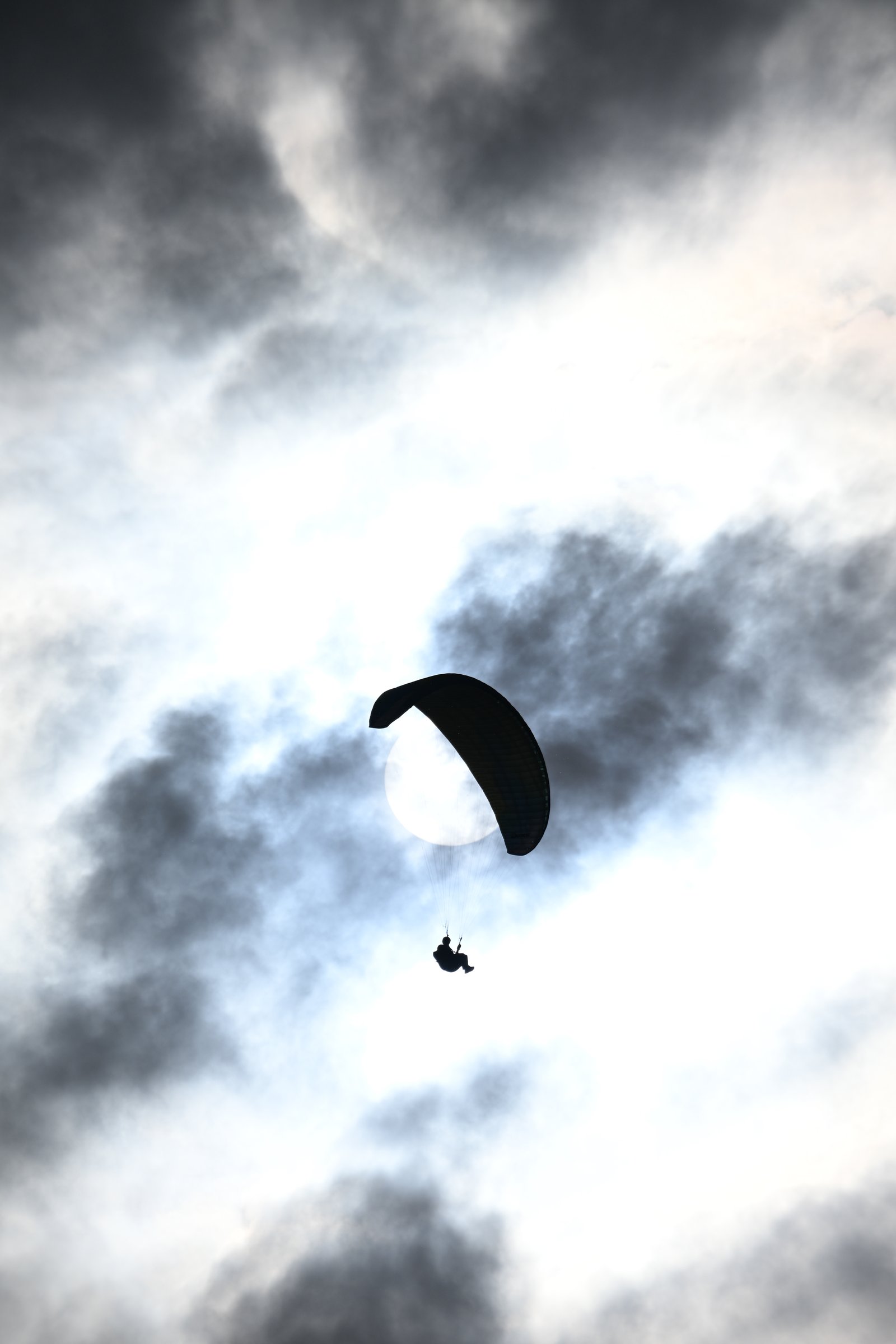
A paraglider passes in front of the sun in the countryside of Brittany, France. Paragliders are towed by a car to an altitude around 400-600m above the ground, and they try to escape the premises by catching thermals. Whoever gets the furthest away wins.
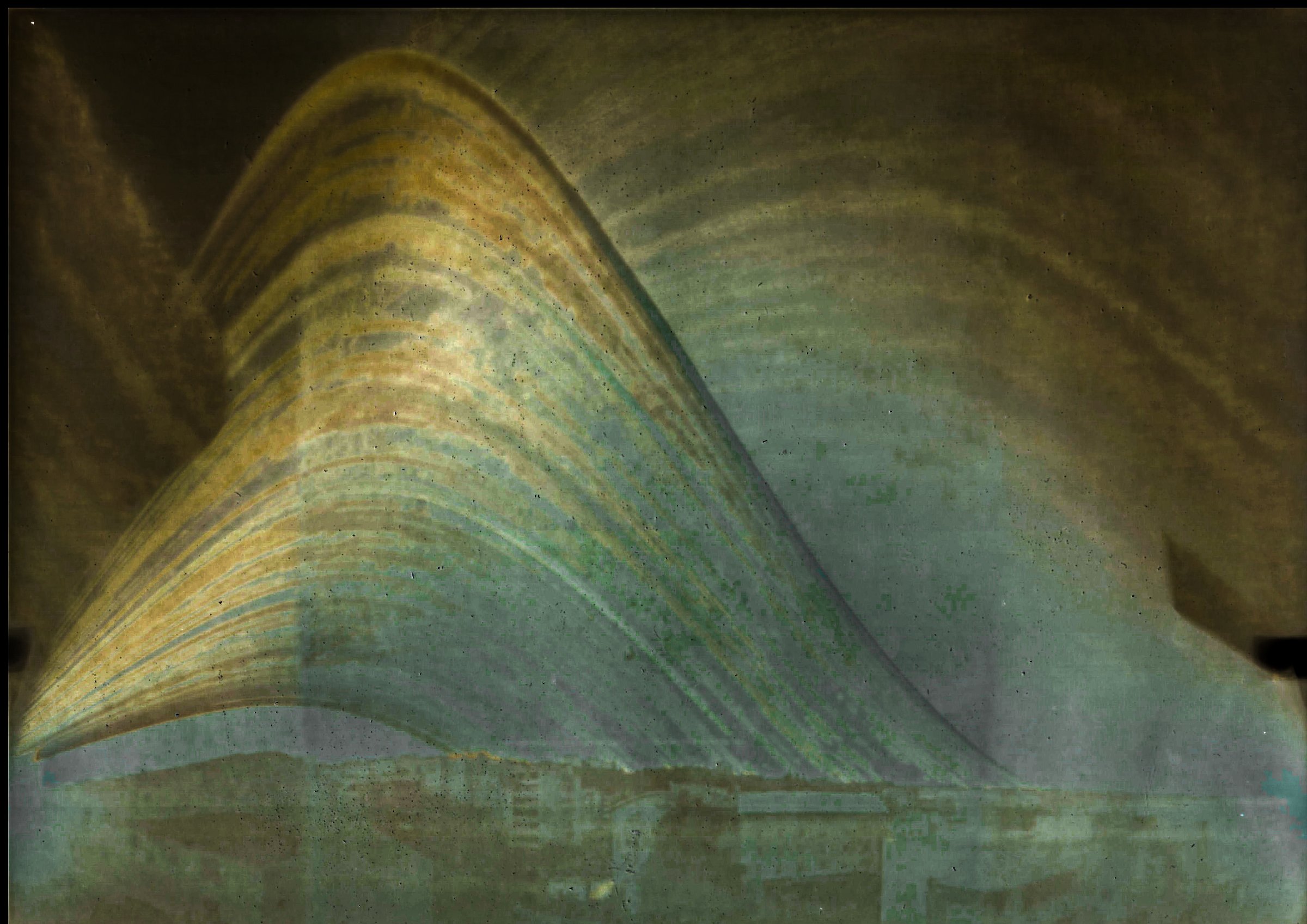
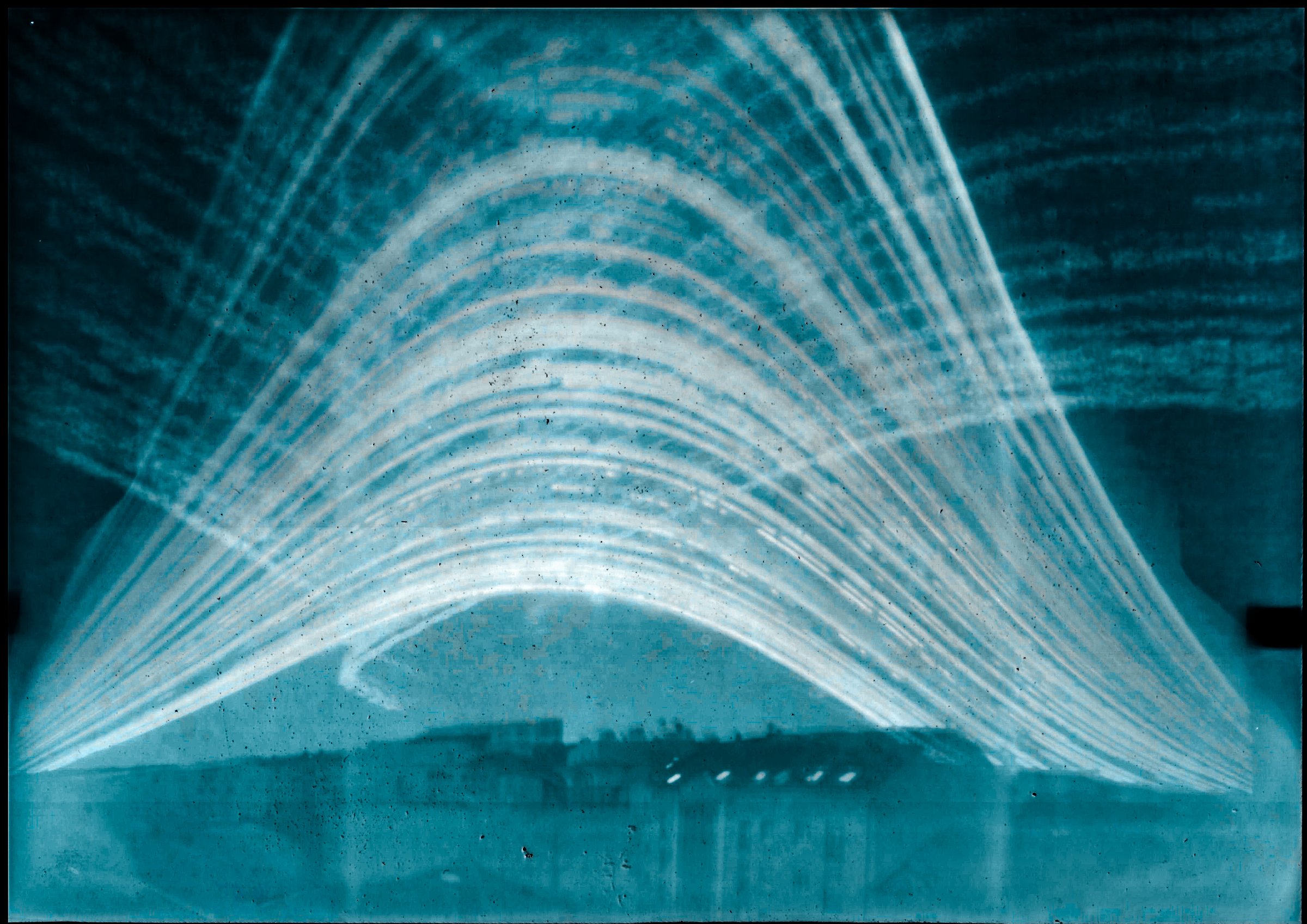
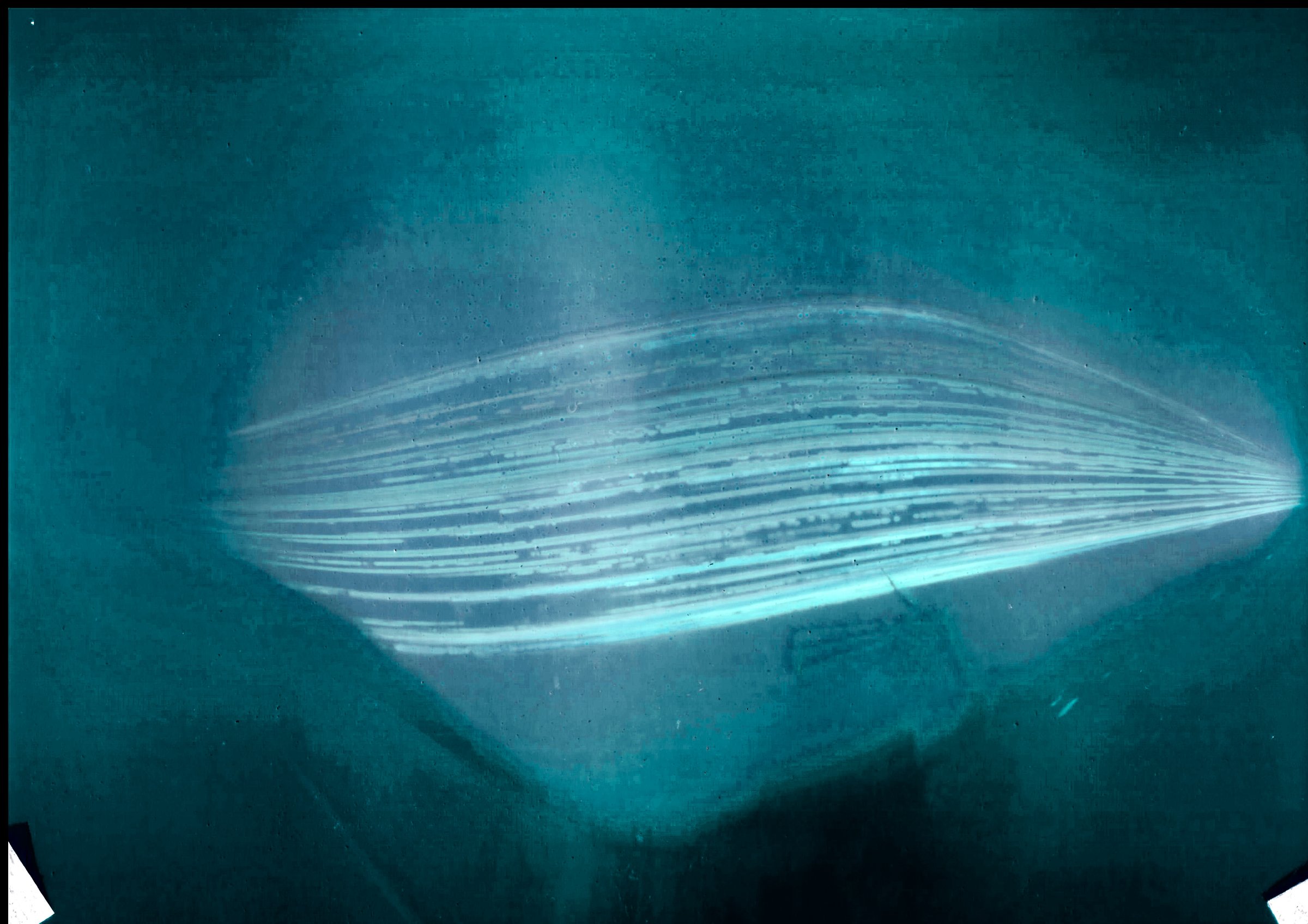
This solargraph documents the sun's apparent path across the western sky over a 6 month period. Created using a pinhole camera and light-sensitive photographic paper, the image captures the sun's daily trajectory as a series of concentric arcs—wider and higher during summer months, lower and more compressed during winter. The technique reveals what remains invisible to the human eye: the sun's precise seasonal migration across the celestial dome, with each arc representing a single day's solar journey. The landscape silhouette anchors the image to a specific geographic location, while atmospheric particles and dust scattered across the film's surface add texture to the record. This method of long-exposure solar documentation has been employed by scientists and artists alike to visualize Earth's axial tilt and orbital mechanics in a single frame.
This solargraph documents the sun's apparent path across the western sky over a 6 month period. Created using a pinhole camera and light-sensitive photographic paper, the image captures the sun's daily trajectory as a series of concentric arcs—wider and higher during summer months, lower and more compressed during winter. The technique reveals what remains invisible to the human eye: the sun's precise seasonal migration across the celestial dome, with each arc representing a single day's solar journey. The landscape silhouette anchors the image to a specific geographic location, while atmospheric particles and dust scattered across the film's surface add texture to the record. This method of long-exposure solar documentation has been employed by scientists and artists alike to visualize Earth's axial tilt and orbital mechanics in a single frame.
This solargraph documents the sun's apparent path across the western sky over a 6 month period. Created using a pinhole camera and light-sensitive photographic paper, the image captures the sun's daily trajectory as a series of concentric arcs—wider and higher during summer months, lower and more compressed during winter. The technique reveals what remains invisible to the human eye: the sun's precise seasonal migration across the celestial dome, with each arc representing a single day's solar journey. The landscape silhouette anchors the image to a specific geographic location, while atmospheric particles and dust scattered across the film's surface add texture to the record. This method of long-exposure solar documentation has been employed by scientists and artists alike to visualize Earth's axial tilt and orbital mechanics in a single frame.
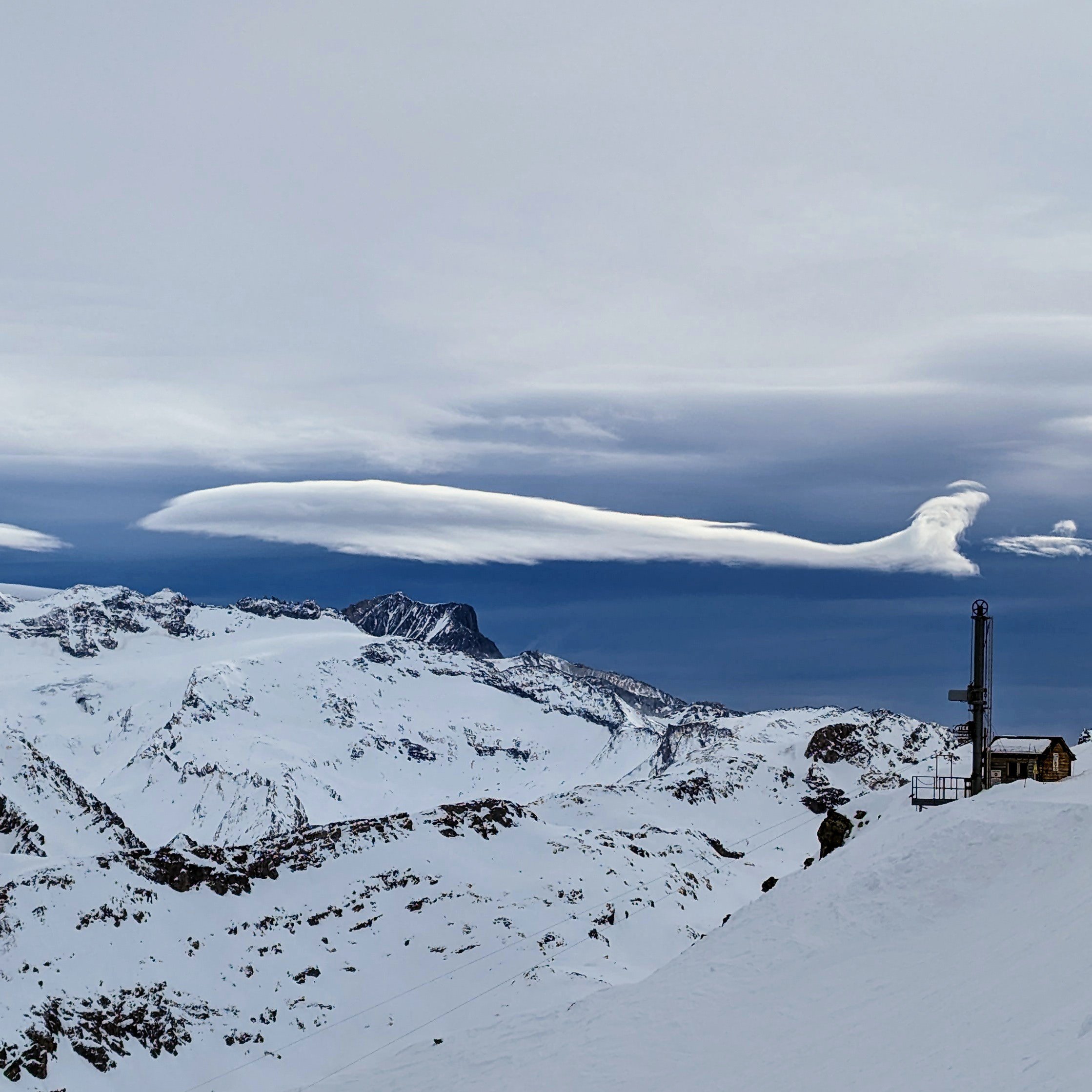
A striking lenticular cloud resembling a fish hovers above the snow-covered peaks of the Three Valleys ski region in Savoy, captured at 09:01 on 1 February 2024. The distinctive lens-shaped formation, characteristic of stable air flowing over mountainous terrain, stretches horizontally across the valley system with an elongated body and curved tail section that creates the uncanny zoomorphic appearance. The phenomenon occurs when moist air is forced upward by the Alpine ridge system, cools to its dew point, and remains stationary relative to the wind patterns—creating the cloud's smooth, stratified appearance. The sharp contrast between the white cloud mass and the deep blue sky indicates strong atmospheric stability and clear visibility conditions typical of high-pressure systems in the region.
Mountain cheese is melted using a machine and poured on potatoes and charcuterie. The tradition of Raclette is found all across France during the winter months. It's a convivial moment shared with friends or family.